

- 4.35 MW Total Charging Capacity
- 23 DC Fast Chargers Installed
- 30% Lower Charging Costs vs. Unmanaged System
- 100–160 Tons Annual GHGs Avoided per Bus
4 MW of Managed Bus Charging Cuts St. Louis Metro Transit's Costs by More Than 30%
Metro Transit is the public transportation system for Greater St. Louis, operated by the Bi-State Development Agency since 1963. It operates MetroBus across more than 50 routes and 500 square miles spanning Missouri and Illinois, along with the 46-mile MetroLink light rail network and Call-A-Ride paratransit service. The system clocks roughly 19 million rides a year and is actively transitioning its buses from diesel to electric.
Charging a Transit Fleet at Depot Scale Without Runaway Demand Charges
Transit agencies electrify to cut emissions, fuel spend, and maintenance costs, and to give riders a quieter ride. At depot scale, the economics get harder. A facility drawing megawatts can trigger demand charges that rival the cost of the energy itself, and utility time-of-use rates penalize charging during peak-usage hours. Buses also must maintain enough state of charge to finish every scheduled run, so charging cannot simply be deferred to whenever power happens to be cheapest.
Intelligent Load Management Serves Largest Electric Bus Fleet in U.S.
INSTALLATION TYPE
- Fleet Charging
INSTALLATION SIZE
- 23 DC Fast Chargers
LOCATION
- St. Louis, MO
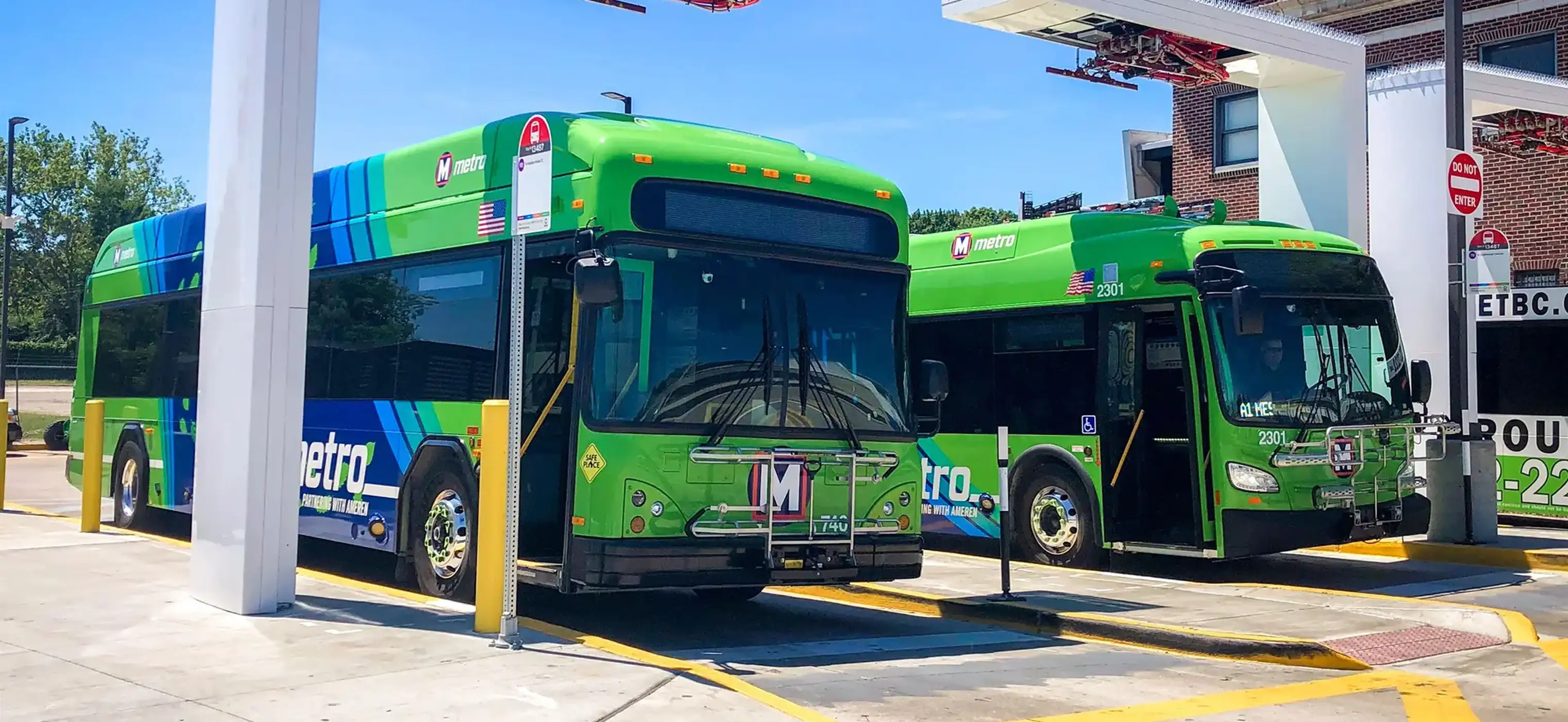
Working with New Flyer of America, PowerFlex delivered the charging hardware, consulting, and charge management software behind Metro Transit's battery-electric bus program. The installation pairs 20 chargers rated at 150 kilowatts (kW) with three 450 kW units, covering overnight depot charging at the Brentwood MetroBus Facility and in-route overhead charging at the Broadway & Taylor Transit Center. At 4.35 megawatts (MW), it was the largest electric bus charging project in the U.S. at the time of deployment.
ChargePilot® by PowerFlex runs the site as a single system. Its intelligent load management adjusts each bus' charging performance based on real-time travel schedules, the time-of-use rates set by local utility Ameren Missouri, and the demand charges the site would otherwise incur — delivering power at the lowest available cost while ensuring every bus has enough charge to complete its scheduled service. Managed this way, charging costs run more than 30% below what unmanaged charging would incur.