
Energy Solutions for School Buses
Talk to an Expert
Electric school buses deliver cleaner air for students and drivers, quieter routes through neighborhoods, and markedly lower fuel and maintenance costs than diesel. School districts have a unique operational profile: They move the most precious cargo, their electrification arrives via grants, and they maintain small transportation teams whose buses sit parked for most of the day and all summer. PowerFlex helps districts and their contracted operators turn those constraints into advantages with smart EV charging, onsite solar, battery energy storage, and vehicle-grid integration.

School Bus Energy Basics
- School bus yards have a distinct combination of long overnight charging periods combined with concentrated charging in narrow windows between the morning and afternoon runs.
- If unmanaged, yard charging can multiply a site's peak electricity usage and lead to expensive demand charges or electrical upgrades.
- School buses sit idle on weekends and through the summer, creating an opportunity to leverage them as energy storage assets.
- Coupled with solar arrays, battery energy storage can serve part of a garage's load locally to reduce grid draw and prevent demand charges, particularly in the narrow midday charging window.
- Grant-funded projects carry reporting obligations that depend on accurate energy and emissions data.
Why School Bus Fleets Need a Different Strategy
A school bus fleet has one of the most distinctive duty cycles in transportation. Buses run hard for a few hours in the early morning, sit through the middle of the day, run again in the afternoon, and then park until the next morning. Across weekends and summer break, they may not move for weeks. That pattern cuts both ways: Charging demand arrives in concentrated bursts that can spike a district's utility bill, while the same buses spend most of the year parked with usable energy sitting in their batteries.
Districts also operate under constraints that commercial fleets do not. Capital for electrification often comes from grant programs with fixed deadlines and reporting requirements attached. Transportation departments are small and rarely staffed for energy management. And a bus yard sometimes shares a meter with schools, offices, and maintenance shops, meaning charging loads land on top of building loads throughout the day.
An integrated approach gives school districts:

Buses that are charged and ready for every morning and afternoon run

Energy costs that stay inside the transportation budget

Room to add buses as new grant awards arrive

Exportable data for grant, board, and air-quality reporting
How PowerFlex Supports School Districts
PowerFlex delivers integrated energy solutions designed for the operational realities of school bus fleet electrification.
Smart EV Charging
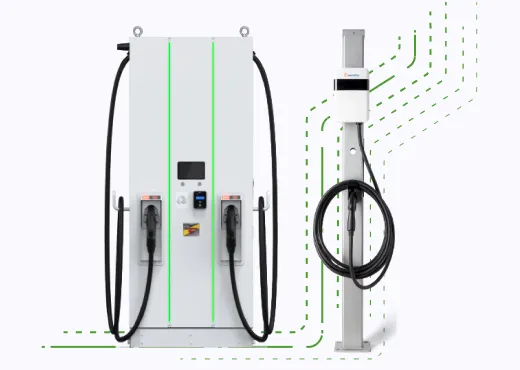
PowerFlex chargers use Adaptive Load Management® (ALM) to intelligently distribute available power across active charging stations in real time so agencies can deploy far more charging positions than a conventional design would allow without demand charges or upgrades.

Fleet Management Software
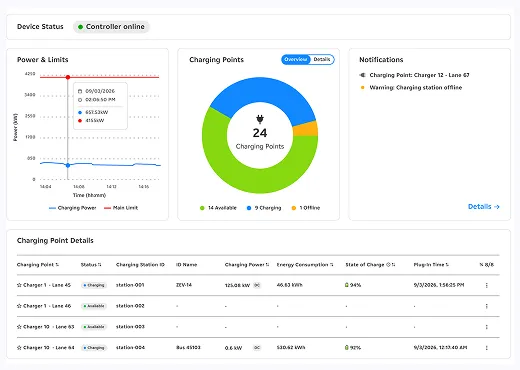
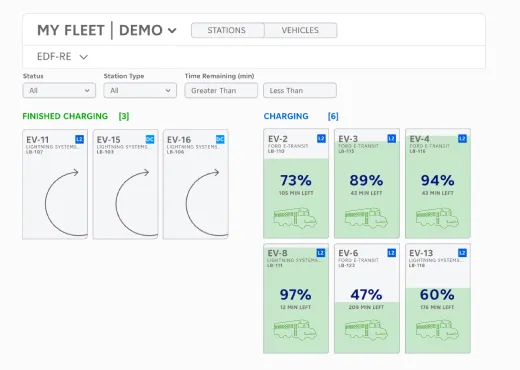
PowerFlex’s fleet management platforms deliver features that matter most to operators:
ChargePilot® by PowerFlex lets personnel monitor and control chargers remotely and precondition buses economically.
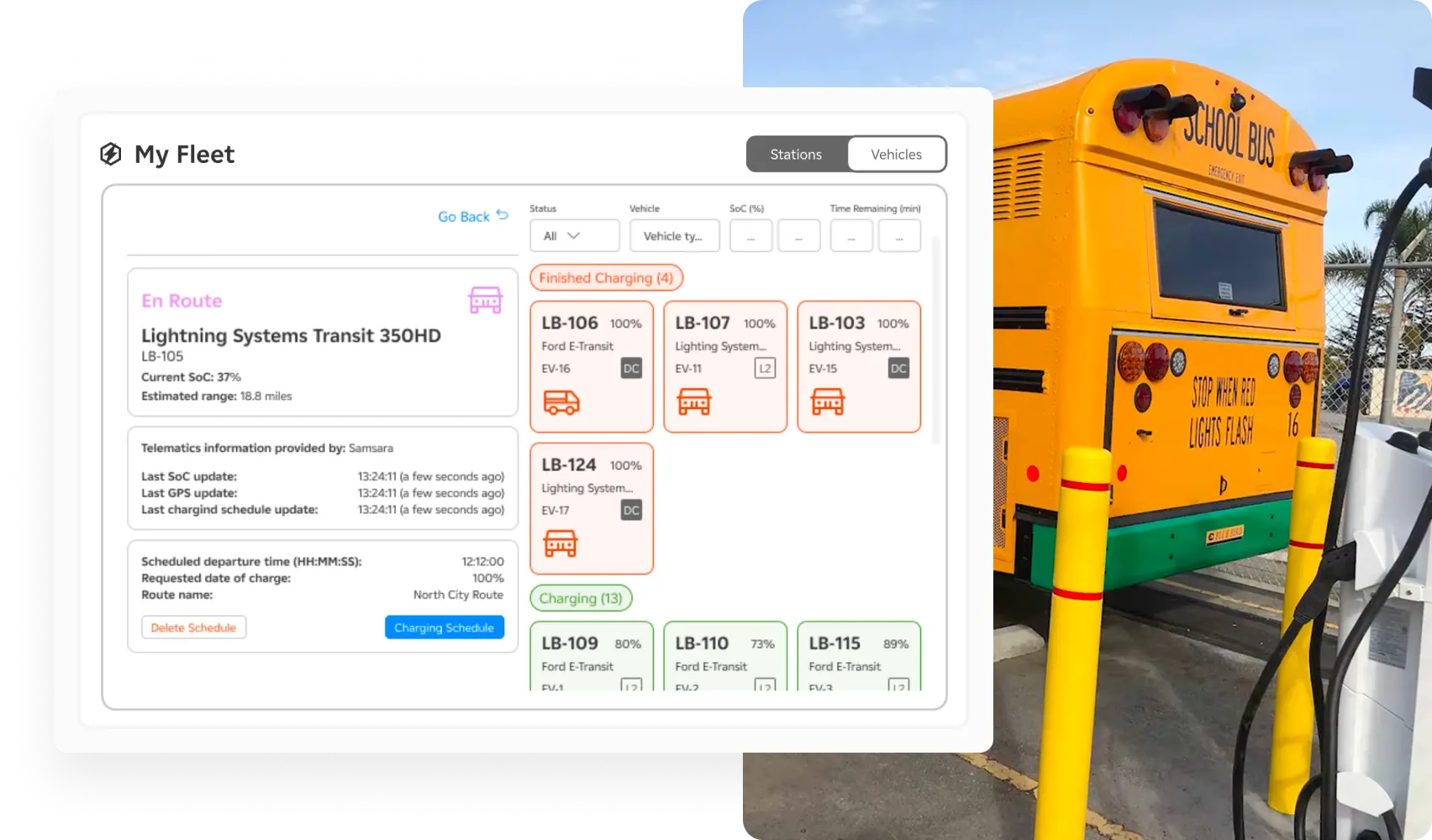
Fleet+ offers deep telematics integrations that surface vehicle range, location, and state of charge.
Onsite Solar
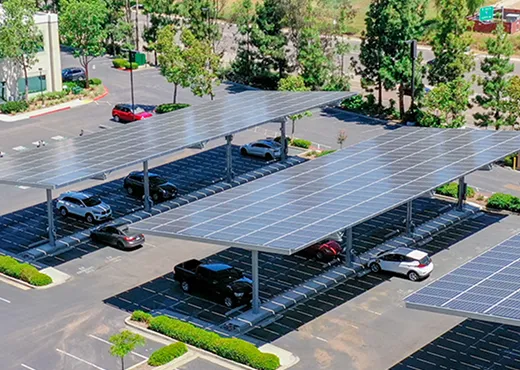
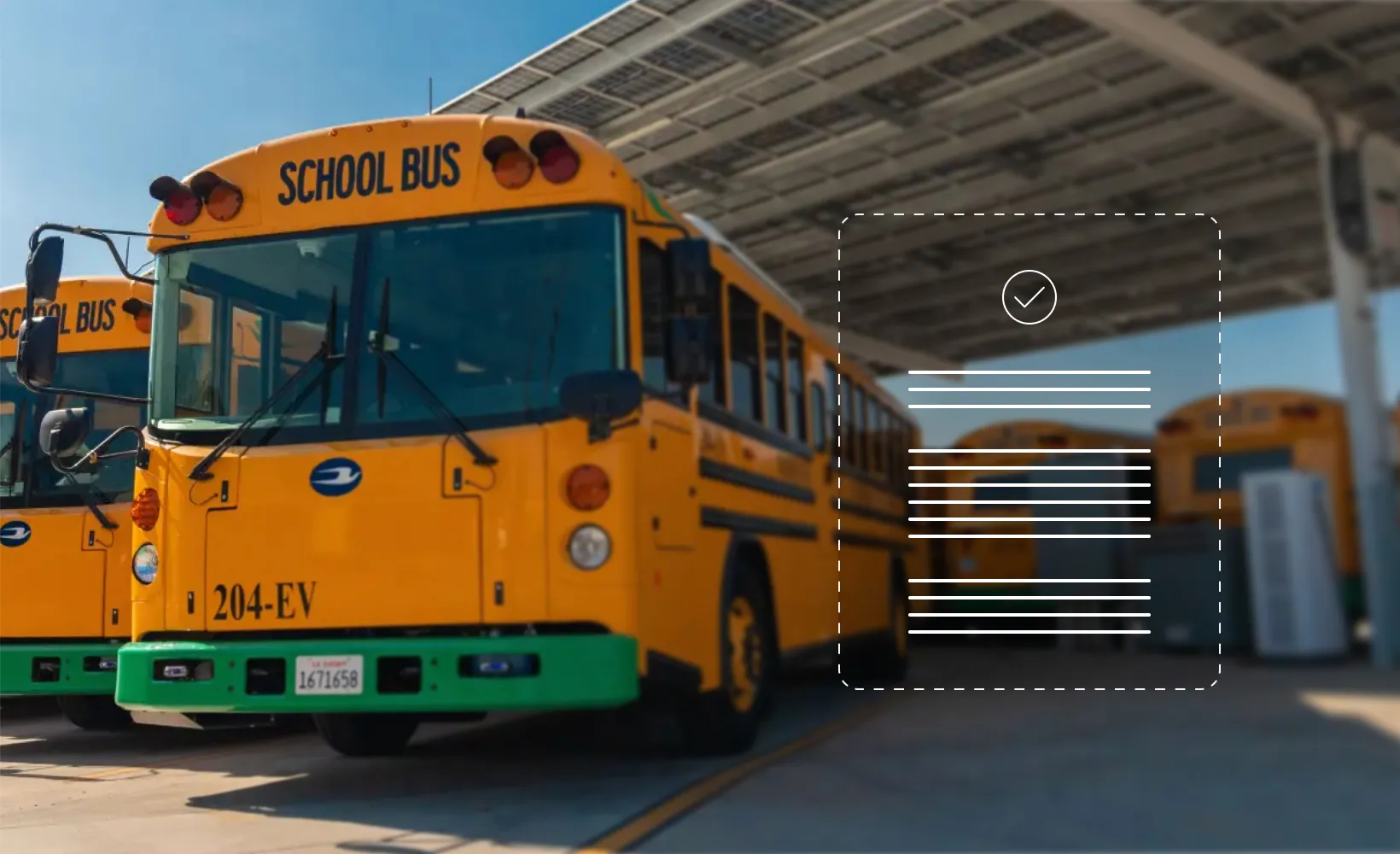
Solar offsets electricity usage and reduces dependence on grid power during high-cost periods. Ground-mounted and rooftop systems make productive use of space the fleet already occupies, while solar carports provide shade for parked vehicles and staff areas.
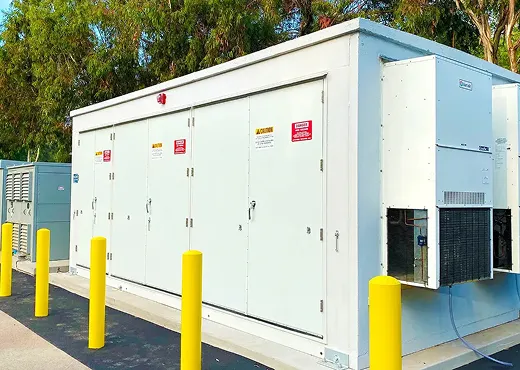
Battery Energy Storage
Adding battery storage helps districts manage peak demand, capture excess solar generation, and improve yard resiliency. Stored energy can be dispatched to shave spikes when many buses charge at once.
Vehicle-Grid Integration
With VGI technology, PowerFlex turns idle school buses into energy storage assets, allowing districts to participate in utility programs such as demand response that compensate customers for dispatching energy to the grid.

PowerFlex X
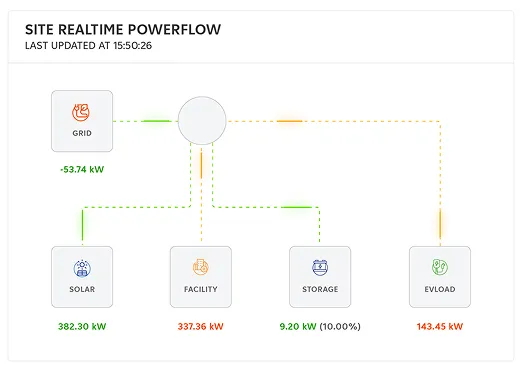
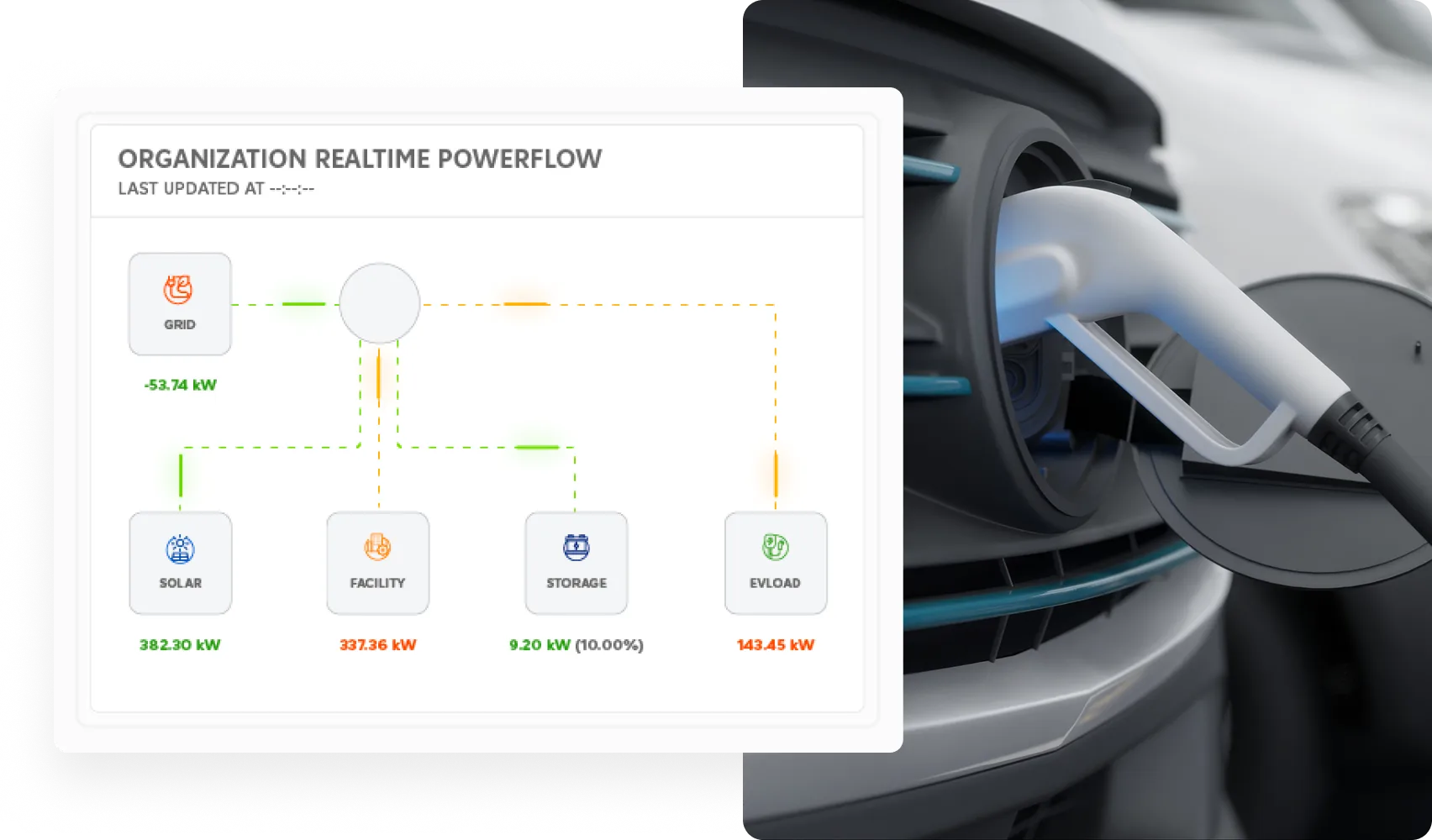
The PowerFlex X™ intelligent energy management platform monitors and co-optimizes EV charging in conjunction with facility loads, solar generation, and battery storage to reduce operating costs, improve efficiency, and support scalability as your fleet grows.
Where PowerFlex Delivers Value
From implementation through daily operation, PowerFlex addresses the challenges that most often stall school bus electrification.
Charged and Ready for Every Run
With charging schedules built around the school bell, power is distributed to the buses leaving first — guaranteeing they pull out on time. But readiness goes beyond schedule optimization. Our hardware integrations team understands the intricacies of school bus charging and works directly with OEMs to resolve most issues before district staff need to get involved.

Controllable Energy Costs
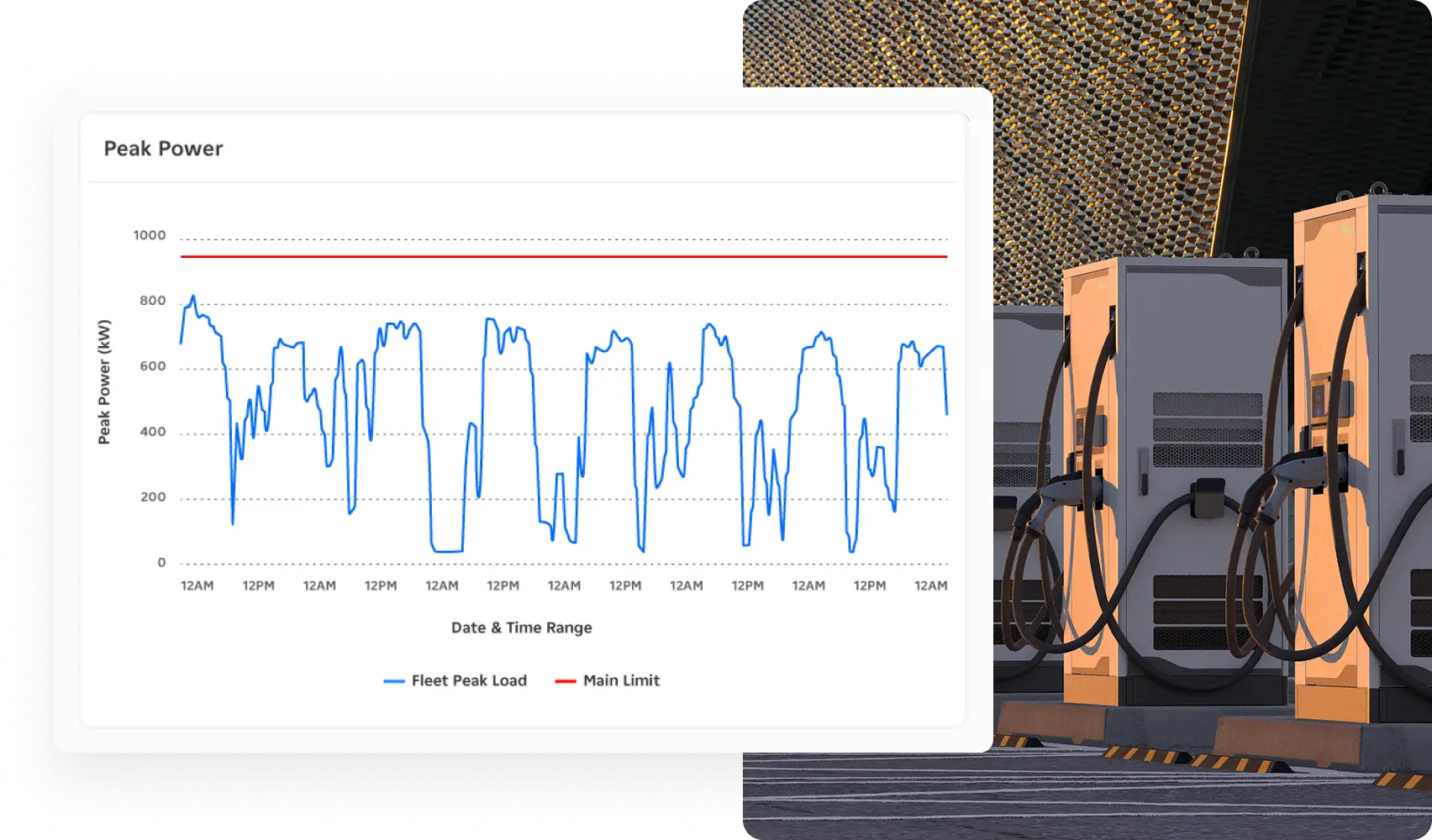
Districts budget a year at a time and cannot absorb surprises. Charging is shifted toward the lowest-cost hours and spread out to hold down the peaks that drive demand charges, so the transportation budget stays predictable across the school year.
Advanced Interoperability
Districts frequently mix Level 2 charging for overnight dwell with DC Fast Charging for quick midday turnarounds. PowerFlex’s open, OCPP 2.0.1-compliant platforms work across charging speeds and major charger OEMs, granting flexibility and protecting against vendor lock-in.
Automated Operations
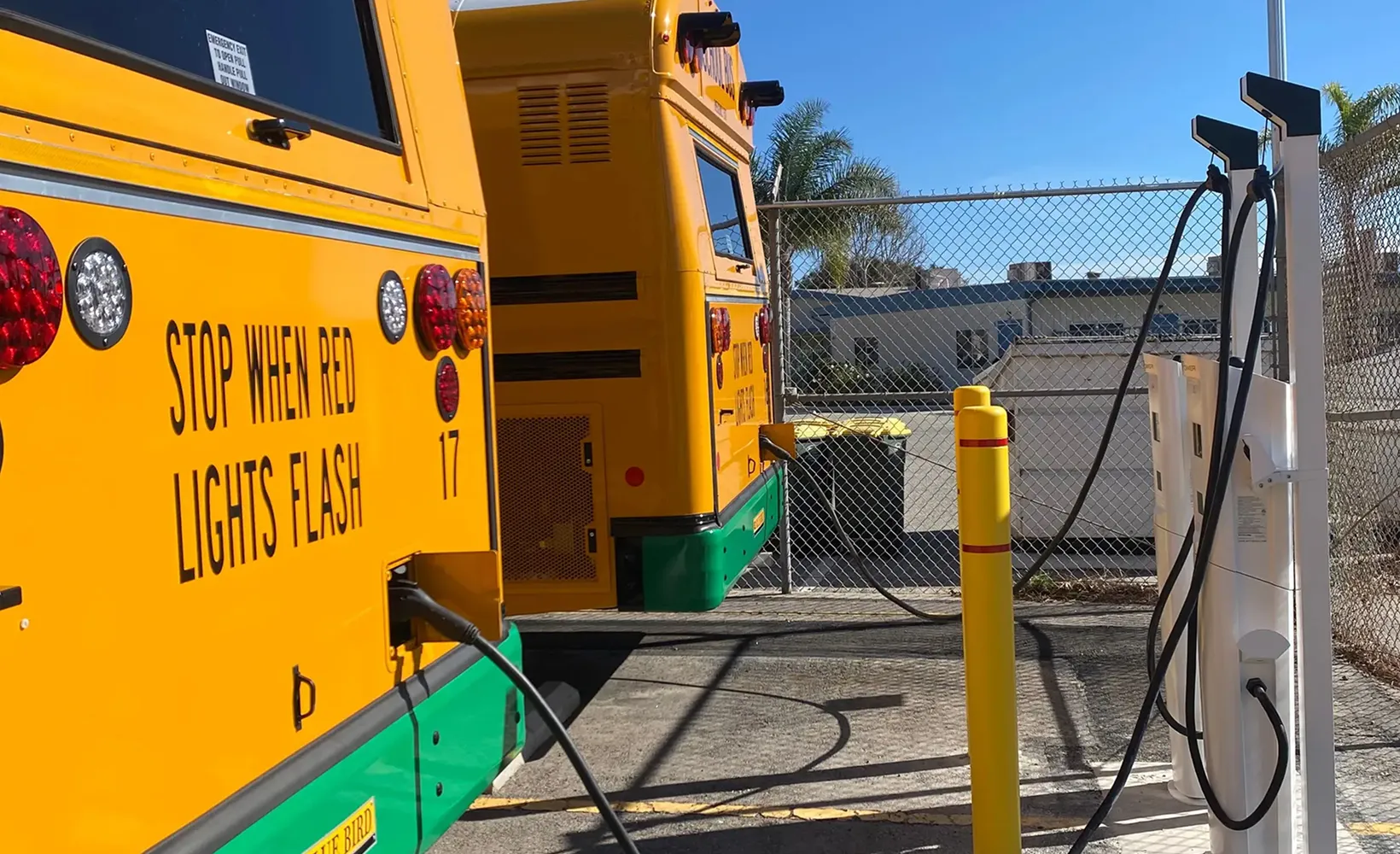
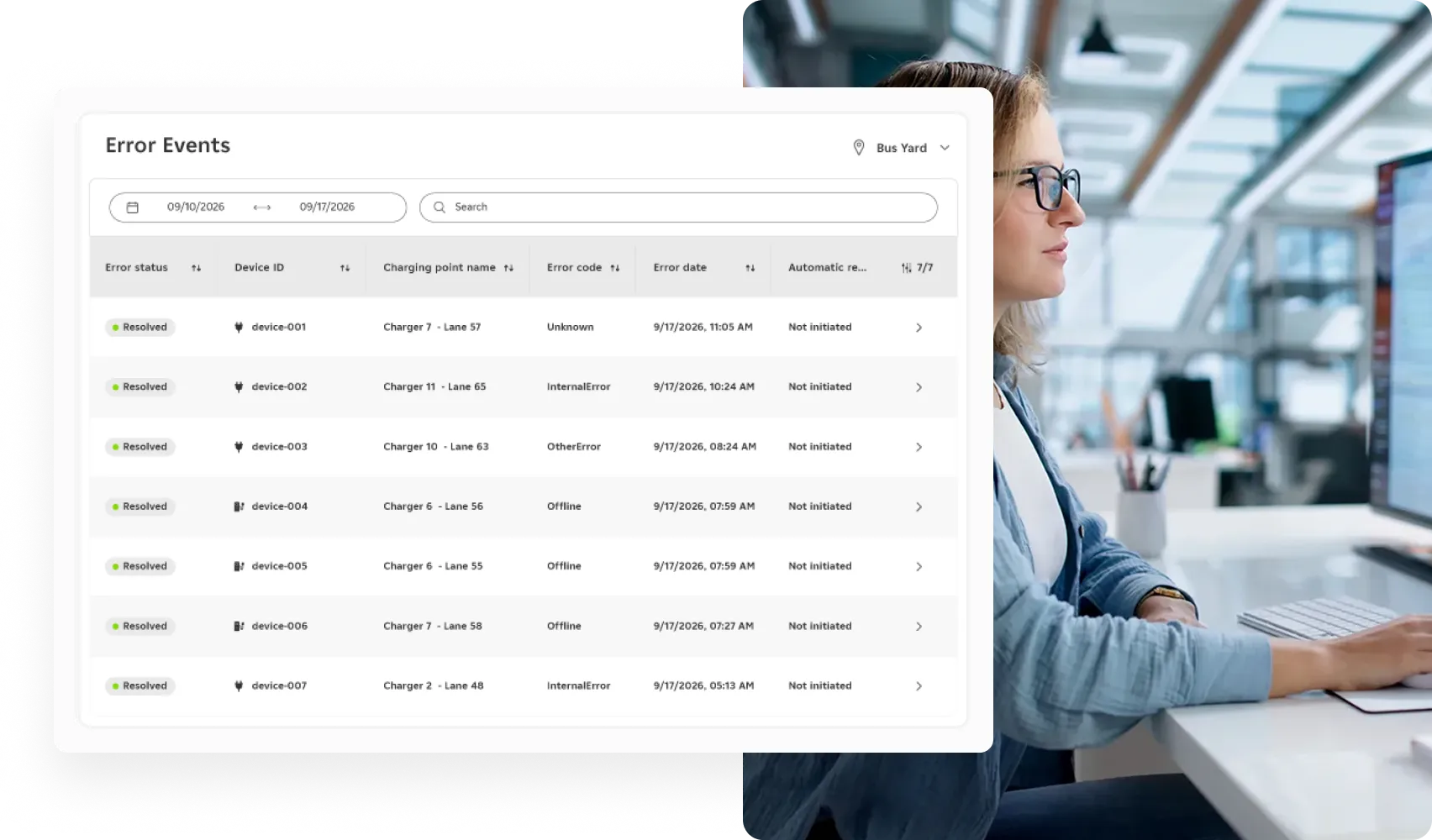
Small transportation teams should not have to babysit chargers. ChargePilot® by PowerFlex’s continuous error detection runs in the background, surfaces faults as they occur, and allows many issues to be resolved remotely rather than with a service visit to the yard.
Turn Idle Buses Into Storage Capacity
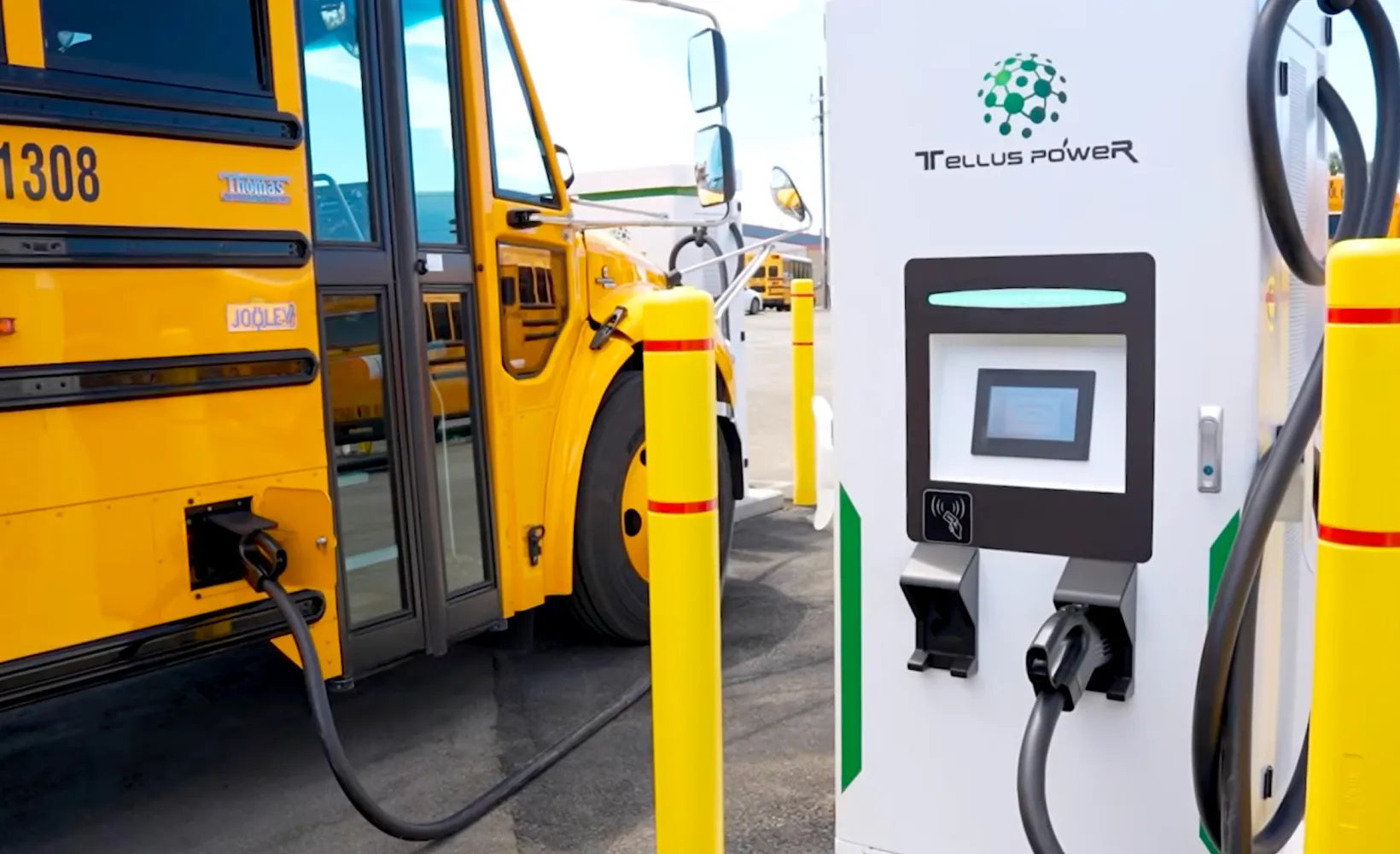
School buses are parked far more than they are driven. Where buses and chargers support bidirectional charging, that idle time can be used to send energy back to the grid or to district buildings, opening the door to utility program revenue and backup power during outages.
Leverage Integrated Telematics
PowerFlex X with Fleet+ integrates with trusted telematics providers like Samsara and Geotab, giving operators complete visibility into vehicle state of charge, estimated range, exact route location, and other data points.
Manage Assets and Get Support
We offer comprehensive services that ensure the long-term functionality and performance of your system well past the point of installation, including: asset management, operations and maintenance, remote response, driver support, software enhancements and updates, and more.
Proven Sustainability Impact
Usage and emissions data is captured automatically and can be exported whenever it is needed, down to the individual bus. That makes it far easier to document carbon reduction for a school board, a community, or a funder.

Grant Program Compliance
Most school bus electrification is paid for with grant money that carries deadlines and reporting conditions. PowerFlex works within those timelines and produces the consumption and generation records districts need to keep awards in good standing.
Cooperative Purchasing With Sourcewell
Government, education, municipalities, and nonprofit agencies looking to electrify their fleets can enjoy streamlined procurement of charging infrastructure with preferred pricing through our Sourcewell awarded contract.
Get in Touch to Learn MoreWho We Help
PowerFlex works with school districts and contracted operators across a wide range of site profiles and organizations.

Fleet Types
- District bus yards and transportation depots
- Contracted operator facilities
- Shared school and maintenance campuses
- Rural districts with dispersed parking
- Regional and multi-district transportation centers

Key Stakeholders
- Transportation directors and supervisors
- Facilities and operations staff
- District finance teams
- Grant coordinators
- Drivers and dispatchers
- Superintendents and school boards
Why a Single-Provider Strategy Matters
School bus electrification is challenging when the work is spread among multiple companies. A fragmented approach creates disconnected data, misaligned system design, and more work for districts that are already juggling a lot.
By partnering with PowerFlex, school districts benefit from:
A coordinated design and deployment process built around real bell schedules and route patterns
One partner across planning, construction, and ongoing asset management
Integrated co-optimization across charging, solar, and storage assets
A future-ready platform that can scale with yard demand over time
Key Considerations for School Bus Projects
Electrifying a school bus fleet comes with many variables, from grant timelines and equipment procurement to system design and charge scheduling. Here are the considerations that should be top of mind for operators as they vet charge management providers.

Route Patterns and Charging Windows
Route length, layover between the morning and afternoon runs, and support for athletics and field trips determine how much energy each bus needs and when. Modeling real schedules as part of a charging simulation helps identify solutions that will provide the requisite power while minimizing costs.

Load and Service Capacity
Bus charging rarely fits inside a yard's existing service, and many yards share a meter or a campus with schools and maintenance shops. Sizing the system means adding the new load to what those buildings already draw — then exploring how managed charging and storage can shave the resulting peaks.
Protect Vehicle Readiness and Uptime
Offline chargers lead to incomplete routes and sunk costs. Transparent charger monitoring digs into station status, charging speed, and wireless connectivity while error monitoring and remote resolution address issues before they escalate.

Yard Layout and EVSE Placement
Buses park in tight, sequenced rows and are moved for fueling, washing, and inspection on a set routine. Charger placement and cable routing need to be mapped out so drivers and staff can move vehicles through the yard without obstruction.

Interoperability Requirements
Fleets depend on interoperability between chargers, buses, and software. Deploying an open, standards-based platform that leverages OCPP is essential for ensuring fleets that mix charger and vehicle OEMs remain online.
Grant Timelines and Reporting
Awards come with spending deadlines, procurement rules, and reporting conditions that shape the project schedule as much as any engineering constraint. Planning the infrastructure and the reporting approach together avoids scrambling for data after the buses are in service.

Workforce Training
District transportation teams are small, and most staff split their time between driving, dispatch, and the shop. Training has to fit that reality: short sessions scheduled around in-service days or summer break, refreshers that account for seasonal turnover among drivers, and dedicated high-voltage safety instruction for mechanics who have spent their careers working on diesel.
School Districts Partnering With PowerFlex
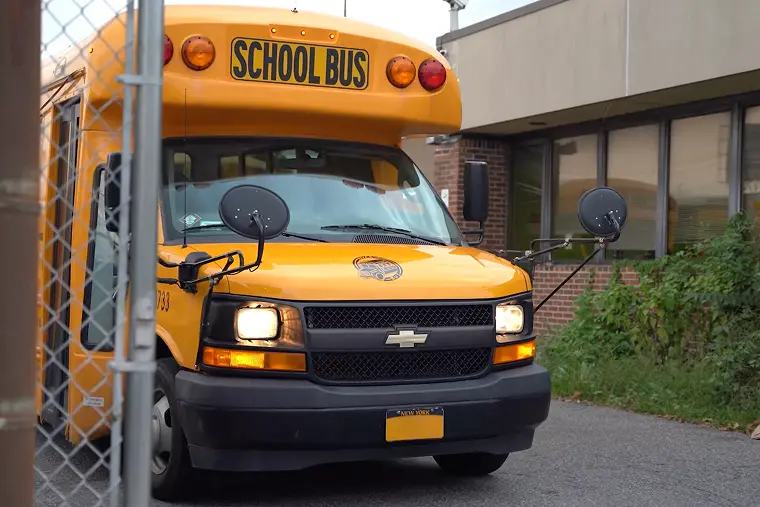
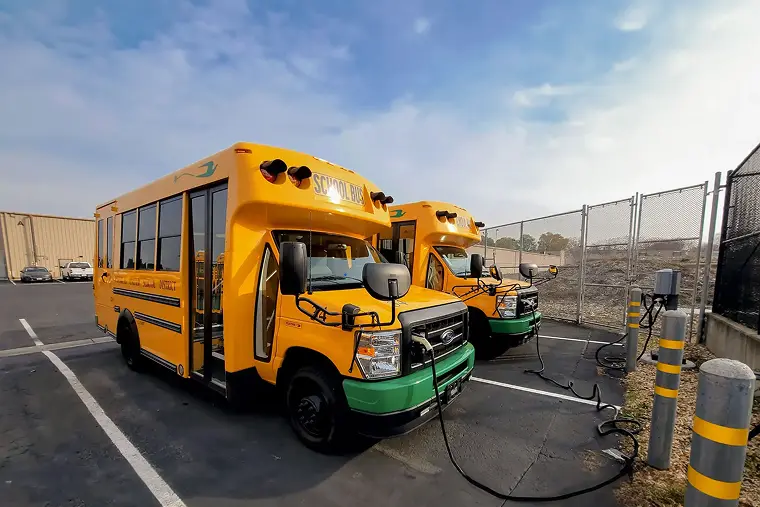
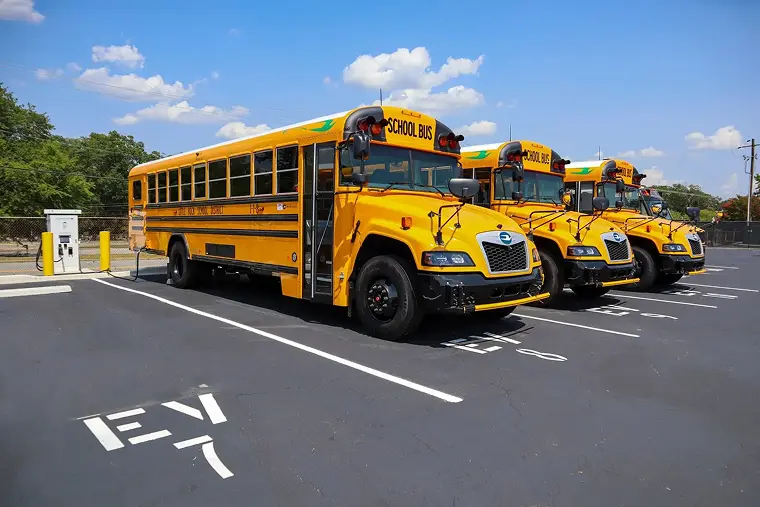
PowerFlex is proud to support districts bringing cleaner, quieter transportation to the students they serve.





EV Chargers Under Management

Electric Miles Provided
Frequently Asked Questions
Can we electrify a bus yard without a utility service upgrade?

Will PowerFlex work with the chargers our district procures?
Will charging work around our morning and afternoon runs?
Can our buses send energy back to the grid or to district buildings?
How do we pull the data our grant reporting requires?
Do you provide training and ongoing support for our transportation staff?
Electrify Your School Bus Fleet With Confidence
PowerFlex helps school districts deploy EV charging, solar, storage, and software solutions that keep buses on route, hold energy costs steady, and scale as each new grant award arrives. Talk to an expert to learn more.