

- 1.8 MW Total Charging Capacity
- 1 MW Utility Connection Limit
- 4 High-Voltage Pantographs
- 14 Electric Buses Supported
PowerFlex Lets Rhode Island Public Transit Authority Run 1.8 MW of Bus Charging on 1 MW Connection
Established in 1964, the Rhode Island Public Transit Authority (RIPTA) runs roughly 60 fixed bus routes, reaching 37 of Rhode Island's 39 municipalities and carrying about 12.5 million riders a year from its main hub at Kennedy Plaza in Providence.
Charging a New Electric Route Without Upgrading the Grid Connection
Transit agencies typically electrify their busiest routes first, where they can make the biggest impact on diesel emissions and rider experience. Those routes also demand the most power. In-line charging returns a bus to service in minutes, but only by drawing heavily on the grid — and a bank of high-voltage pantographs can demand far more than a site's utility connection is rated to deliver. The usual remedy is a distribution upgrade: expensive, slow, and often out of proportion to how much power the site truly needs at any one moment.
Load Management Fits 1.8 MW of Chargers Behind 1 Megawatt
INSTALLATION TYPE
- Fleet Charging
INSTALLATION SIZE
- 1.8 MW Across 4 Pantographs
LOCATION
- Providence-Cranston, RI
INCENTIVE
Federal Transit Administration Low-No Emissions Bus Grant
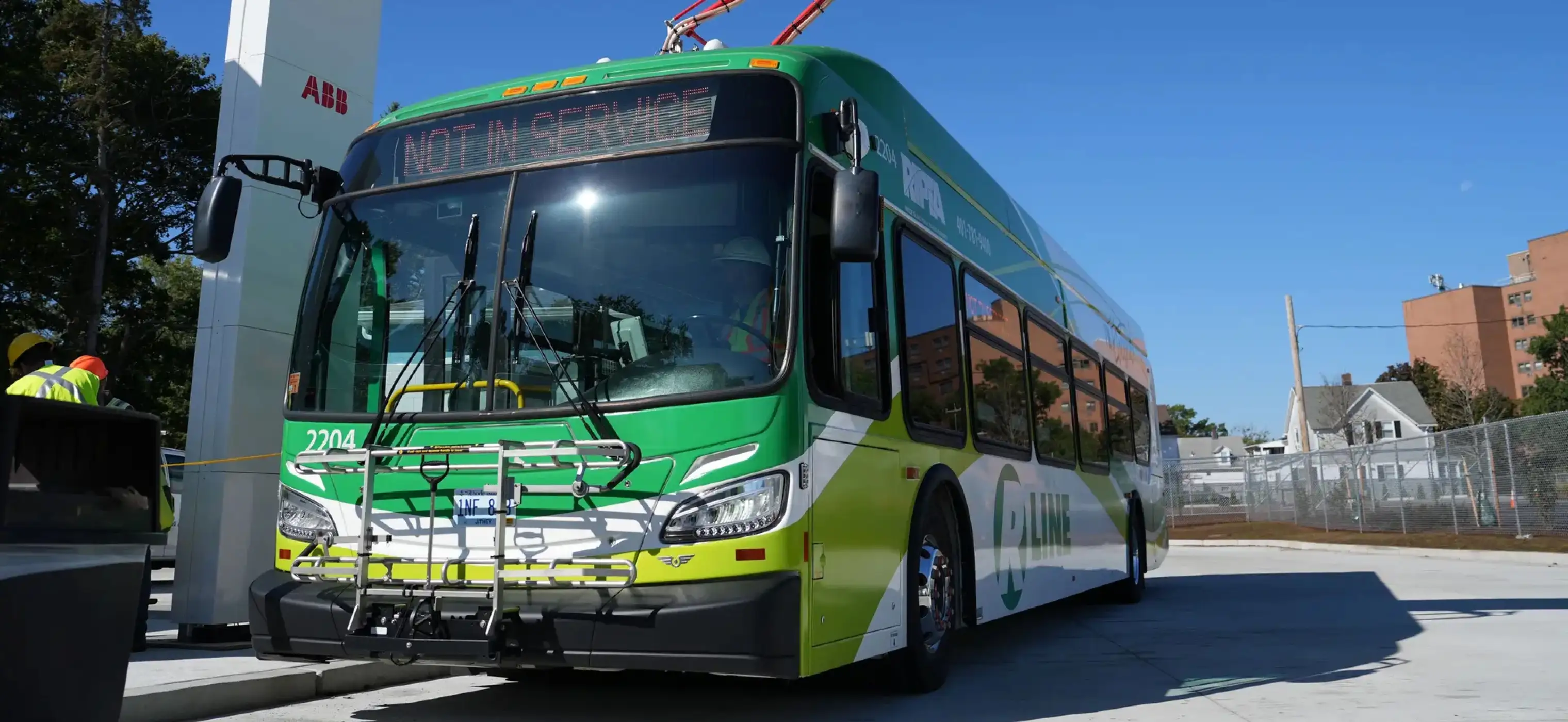
RIPTA's first electrification phase targeted the R-Line, its busiest and most frequent route, running from Pawtucket to Cranston through downtown Providence. At the Broad Street in-line charging station, at the route's southern terminus on the Providence-Cranston city line, PowerFlex installed four high-voltage fast-charging pantographs that top up a bus in five to nine minutes without the driver leaving the seat.
ChargePilot® by PowerFlex makes it all possible. Its intelligent load management holds the combined draw of all four chargers within the site's 1-megawatt (MW) set point, letting RIPTA install 1.8 MW of nameplate charger capacity behind while avoiding a costly infrastructure upgrade.
The station also carries a 600-kilowatt (kW) backup diesel generator. In the event of a grid outage, the system automatically resets its ceiling below 600 kW so charging continues within what the generator can supply.