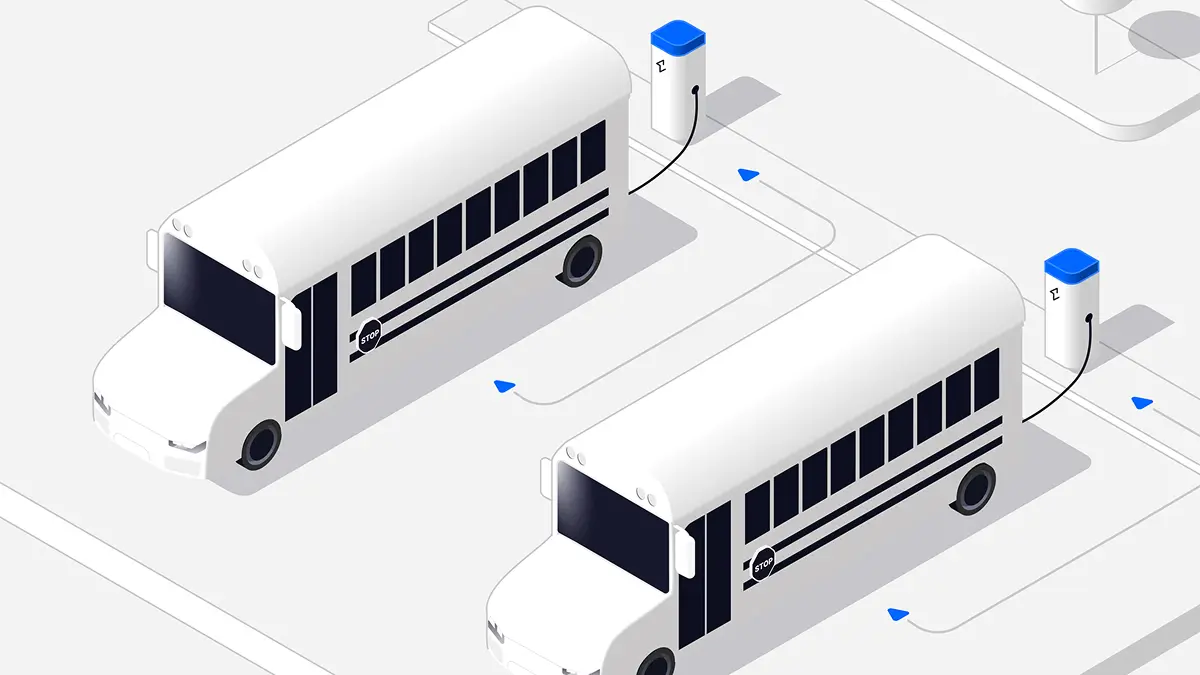
Bidirectional Charging for Electric School Buses
Discover how to power buildings through outages, reduce electricity bills, and earn utility program revenue using the batteries already parked in your depot.
A school bus fleet is one of the most underused energy resources in any district. The buses have large batteries, they return to a single depot, and they sit idle for long stretches — overnight, on weekends, and across the summer. From a grid perspective, that depot is a bank of batteries waiting to be put to work.
Bidirectional chargers turn that potential into value. They let buses discharge as well as charge, so the same battery that moves students in the morning can back up a building during an outage, offset a facility's peak demand, or export power to the grid for revenue.
That capability costs more than standard charging hardware, which is why the decision should start with a value strategy rather than a spec sheet. Matching the equipment to the use case — and confirming interoperability, certifications, and interconnection requirements before you buy — is what separates a project that pays for itself from one that disappoints.
Download the e-book to learn how you can:
- Replace diesel generators with clean backup power through Vehicle-to-Building (V2B) discharge
- Lower your electric bill day to day by offsetting building loads like HVAC, lighting, and other EVs on the same meter
- Generate revenue through utility programs including demand response and dynamic rates with V2G export
- Evaluate chargers with confidence using a clear framework for AC input voltage, bus-to-charger interoperability, and the certifications that matter
- Learn how ChargePilot® by PowerFlex manages charging with the highest degree of reliability and lowest possible cost of energy