

- 1.1 MW Solar Capacity
- 3 Years Payback Period
- 1.4 Million kWh Annual Energy Production
- $3.2 Million 25-Year Positive Cash Flow
1.1-MW Rooftop Solar Project Delivers $3.2 Million Positive Cash Flow for Nitto Denko
Nitto Denko Corporation is a global specialty materials manufacturer headquartered in Osaka, Japan, with operations spanning more than 30 countries. Its North American facilities produce high-performance tapes, films, and adhesive products for industries ranging from electronics to automotive.
Fully Leverage Clean Energy to Realize Financial and Sustainability Goals
Nitto Denko's Lakewood, New Jersey, facility faced mounting pressure on two fronts: Rising grid electricity costs threatened operating margins at a site running continuous production while the company's corporate sustainability targets demanded measurable reductions in carbon emissions. Leadership needed a solution that would simultaneously lower energy spend, generate a compelling return on investment, and advance Nitto Denko's commitment to environmental stewardship — without disrupting active manufacturing operations.
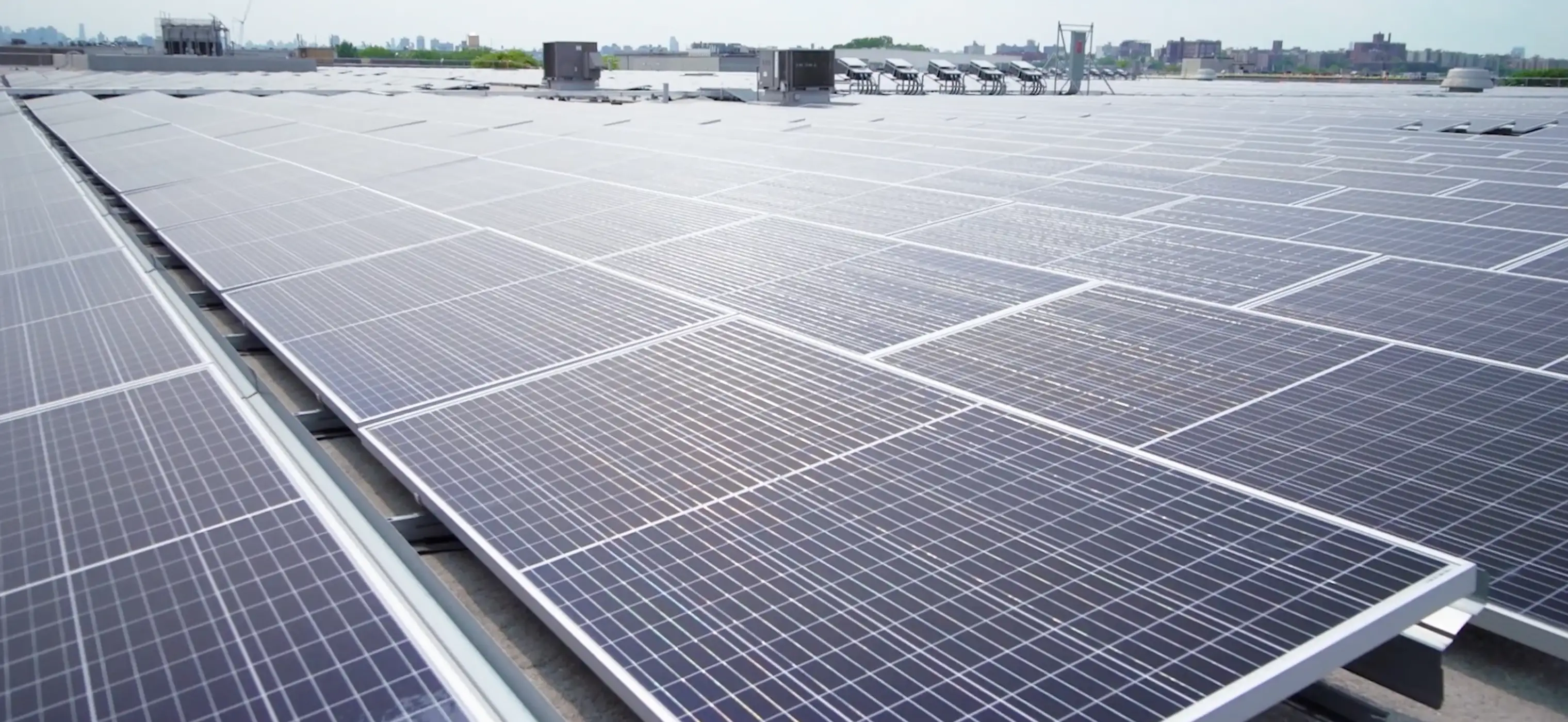
Dual-Configuration Rooftop Solar Array Maximizing Every Square Foot
INSTALLATION TYPE
- Rooftop Solar
INSTALLATION SIZE
- 1.1 MW
LOCATION
- Lakewood, NJ
ANNUAL ENERGY PRODUCTION
1,414,489 kWh
INCENTIVE
NJ TREC
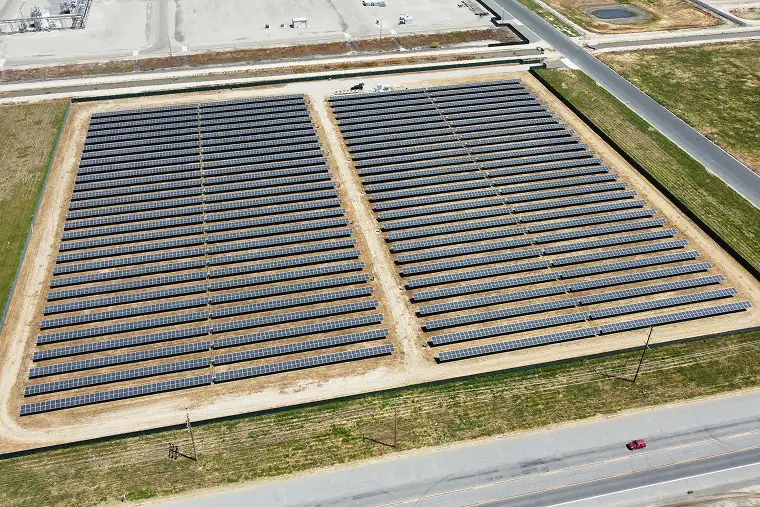
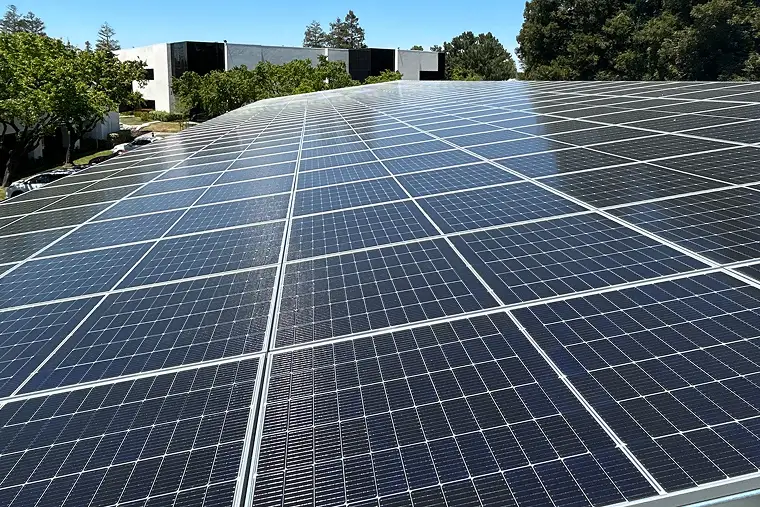
PowerFlex designed and deployed a 1.1-megawatt (MW) rooftop solar energy system across two distinct roof sections at the Lakewood facility, engineering each configuration to suit the underlying structure. The system is split between a 762-kilowatt (kW) ballasted array and a 365-kW metal seam installation, totaling 2,504 modules that generate 1,414,489 kilowatt-hours (kWh) annually.
Through a net metering arrangement, Nitto Denko benefits from exporting excess solar generation — what’s left over after fulfilling local load — to the power grid in exchange for monthly electricity bill credits. The project also qualified for New Jersey's Transitional Renewable Energy Certificate (TREC) program, which provides an additional long-term revenue stream.
Combined with money saved from offsetting utility usage, these financial mechanisms drive a 23.8% return on investment with a 3.3-year payback period, positioning the project to deliver $3.2 million in positive cash flows over 25 years.