Navigating the OBBBA and Preserving ITC Value for Solar & Storage Portfolios
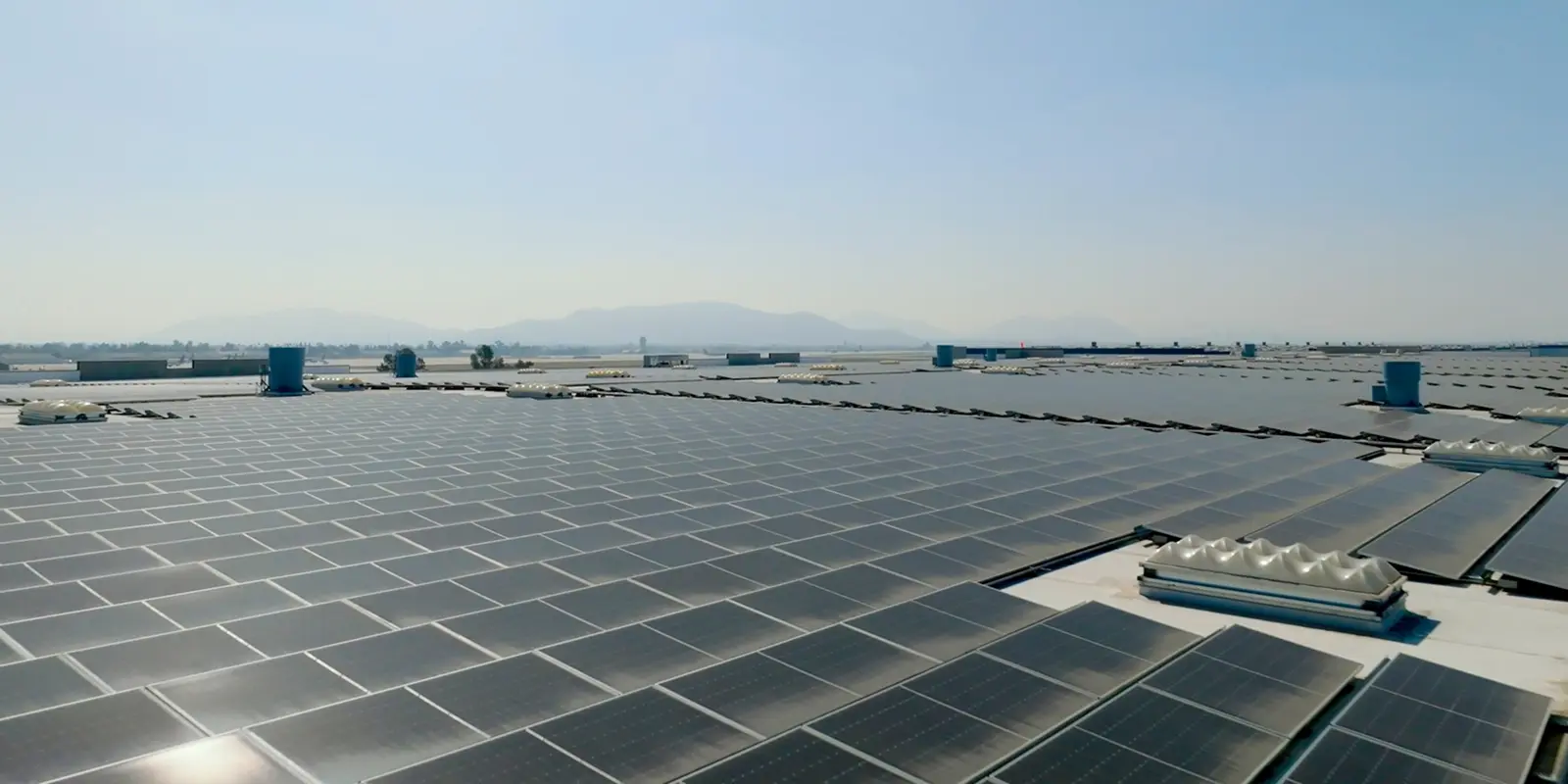
Federal renewable energy policy shifted significantly with the signing of the One Big Beautiful Bill Act (OBBBA) on July 4, 2025. The legislation makes consequential changes to the Investment Tax Credit (ITC), which has long helped commercial and industrial enterprises improve the economics of onsite solar and battery energy storage system (BESS) deployments. Fortunately, there are several strategies businesses like yours can leverage to take advantage of the ITC while there’s still time.
How Does the Big Beautiful Bill Act Affect Solar & Storage Projects?
The OBBBA fundamentally alters the placed-in-service deadlines for solar projects eligible for the ITC — moving up the deadline to December 31, 2027. However, the Act provides a vital exception: Projects that commence construction by July 4, 2026 have a four-year window to place the project into service. This means a project starting construction in mid-2026 has until December 2030 to become operational, providing much-needed flexibility for complex C&I installations.
For battery energy storage systems, the news is more favorable. The OBBBA maintains the window for energy storage projects to qualify for the ITC until 2033. Additionally, the Act makes 100% bonus depreciation permanent for projects acquired and placed in service after January 19, 2025, offering a meaningful financial uplift for portfolios.
Safe Harboring: The Key to Preserving Solar ITC Value
For a solar project to qualify for the ITC under the new law, it must meet the IRS definition of “commencing construction” by the aforementioned deadlines. This can be achieved through safe harboring strategies designed to help companies to meet this definition and lock in the ITC:
5% Purchase Method
Historically, many projects have used the 5% Purchase Method — procuring equipment equal to at least 5% of the total project cost — to retain ITC value amid scheduled rate stepdowns. A company’s ability to leverage this strategy today, however, depends on project size. Only systems less than or equal to 1.5 MWac may use the 5% Purchase Method as a safe-harboring vehicle, and must do so by July 4, 2026.
However, PowerFlex can leverage its safe-harboring strategy that was executed pre-9/2/2025 to offer the 5% Purchase Method to projects over 1.5MWac, just with some extra contracting steps. Contact us to learn more.
Physical Work Method
Alternatively, all projects regardless of size may utilize the Physical Work Method to achieve safe harbor. While there is no 5% purchasing rule, it is the “significant nature” of the work that matters. Additionally, the work must be completed under a binding contract and must satisfy a 50% Domestic Content (DC) requirement. (Projects meeting the DC requirement are entitled to an additional 10% credit on top of the ITC.)
Solar system-related physical work may be performed either onsite or offsite.
Onsite Physical Work
With time running out, installing and wiring solar panels by the required July 4 deadline may not be feasible for early-stage projects. Fortunately, activities like pouring equipment pads, drilling foundations, installing racking, and other work of a significant nature directly related to the solar system qualify. Timing, however, is already very tight for this approach.
Offsite Physical Work
Projects that are in even earlier stages of development may start project-specific work that takes place offsite, away from where the system will eventually be installed. Manufacturing and assembling transformers qualifies, though other solutions may make sense depending on your industry.
PowerFlex is adept at facilitating offsite physical work to help customers capture full ITC value, but time is of the essence. We recommend partnering with us on your solar project now so that all equipment can be ordered as soon as possible.
Navigating FEOC Requirements
A new layer of complexity introduced by the OBBBA is the Foreign Entity of Concern (FEOC) regulation. Its goal is to limit the use of equipment sourced from prohibited foreign entities, with China being the main country of concern. Any project commencing construction in 2026 must comply with these rules to qualify for the ITC:
- Projects must use a minimum amount of non-FEOC equipment, verified by a calculation called the Material Assistance Cost Ratio (MACR). Only specific equipment types outlined by the IRS need to pass this test.
- The taxpayer filing for the ITC cannot be a prohibited foreign entity. (This is generally not a concern for most C&I customers.)
Interim guidance released in February 2026 has brought additional clarity, allowing taxpayers to rely on manufacturer certifications to help prove FEOC compliance.
Avoiding Common Pitfalls
The path to ITC preservation is narrow, and minor administrative or strategic errors can lead to the total loss of credit eligibility. Common pitfalls include:
- 5% Purchase Method: Insufficient equipment documentation or not enough buffer built into purchase percentage (7% is recommended)
- Physical Work Method: Failure to complete documentation or meet the significant-nature requirements for onsite/offsite physical work
- FEOC Compliance: Failure to satisfy requirements at the “qualified facility level” (i.e., at each inverter-level string)
Ultimately, partnering with a solutions provider that’s knowledgeable in safe-harboring strategies and compliance requirements is key to avoiding issues that could jeopardize your ITC eligibility.
It’s Not Too Late — PowerFlex Can Help
As a leading clean technologies solutions provider, PowerFlex is ready to help your organization receive tax credits and other incentives that can reduce your installation costs and accelerate return on investment. We are actively and expertly deploying the safe harbor methods discussed above — ensuring our customers are well positioned to leverage ITC benefits while they last. Ready to join them? Contact us today to get started.