Why Manufacturing Facilities Are Ideal for Solar-Plus-Storage Deployment
For operations and facilities leaders, the decision to invest in onsite energy assets is driven by technical feasibility and long-term financial performance. While many commercial sectors explore renewable integration, the manufacturing industry stands out as a strong candidate for solar-plus-storage deployment.
Manufacturing plants typically possess the scale, structural characteristics, and predictable energy demand necessary to turn solar and battery assets into high-performing operational tools. Here’s why manufacturers are such a good fit for solar-plus-storage, and the benefits the technology brings.
Long, Flat Roofs for Solar Arrays
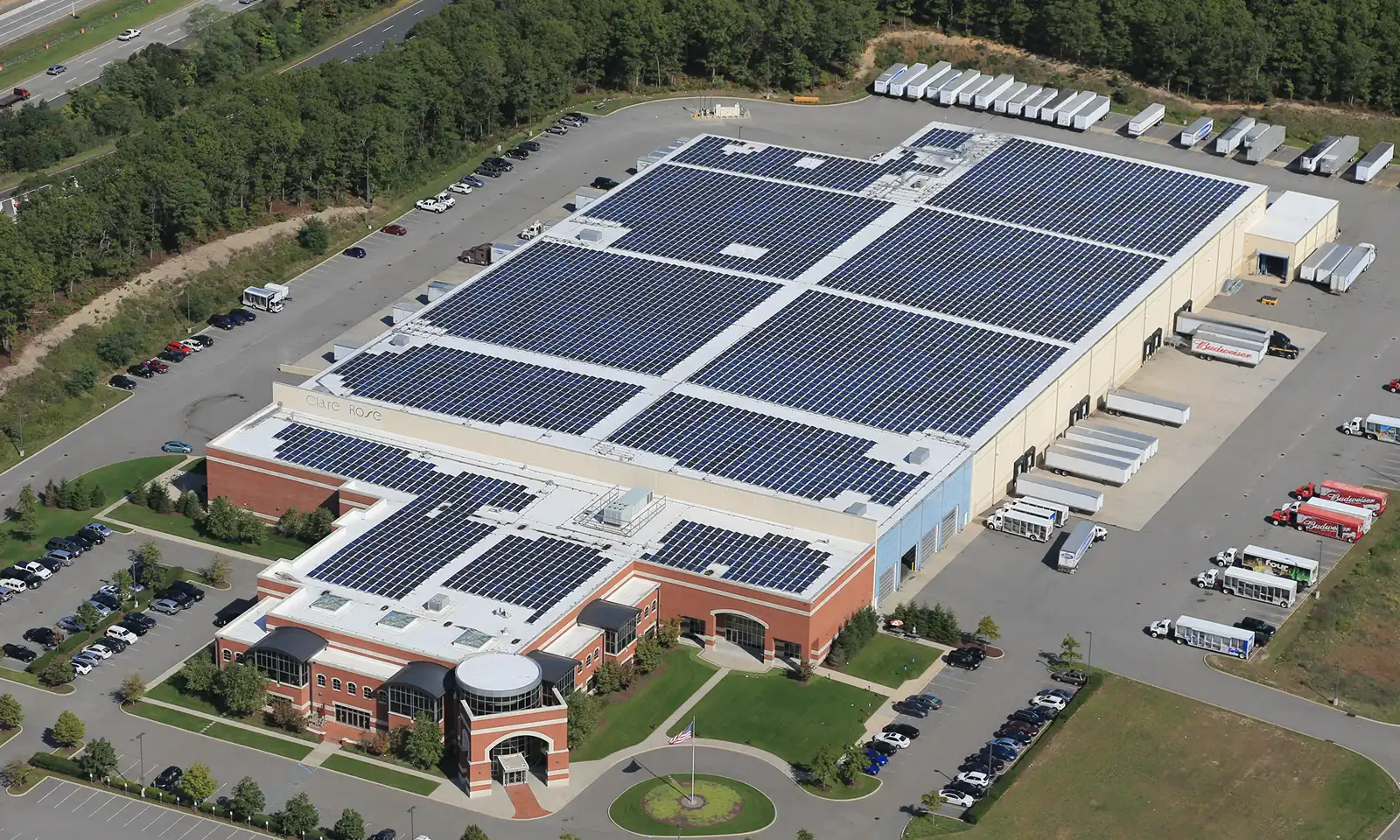
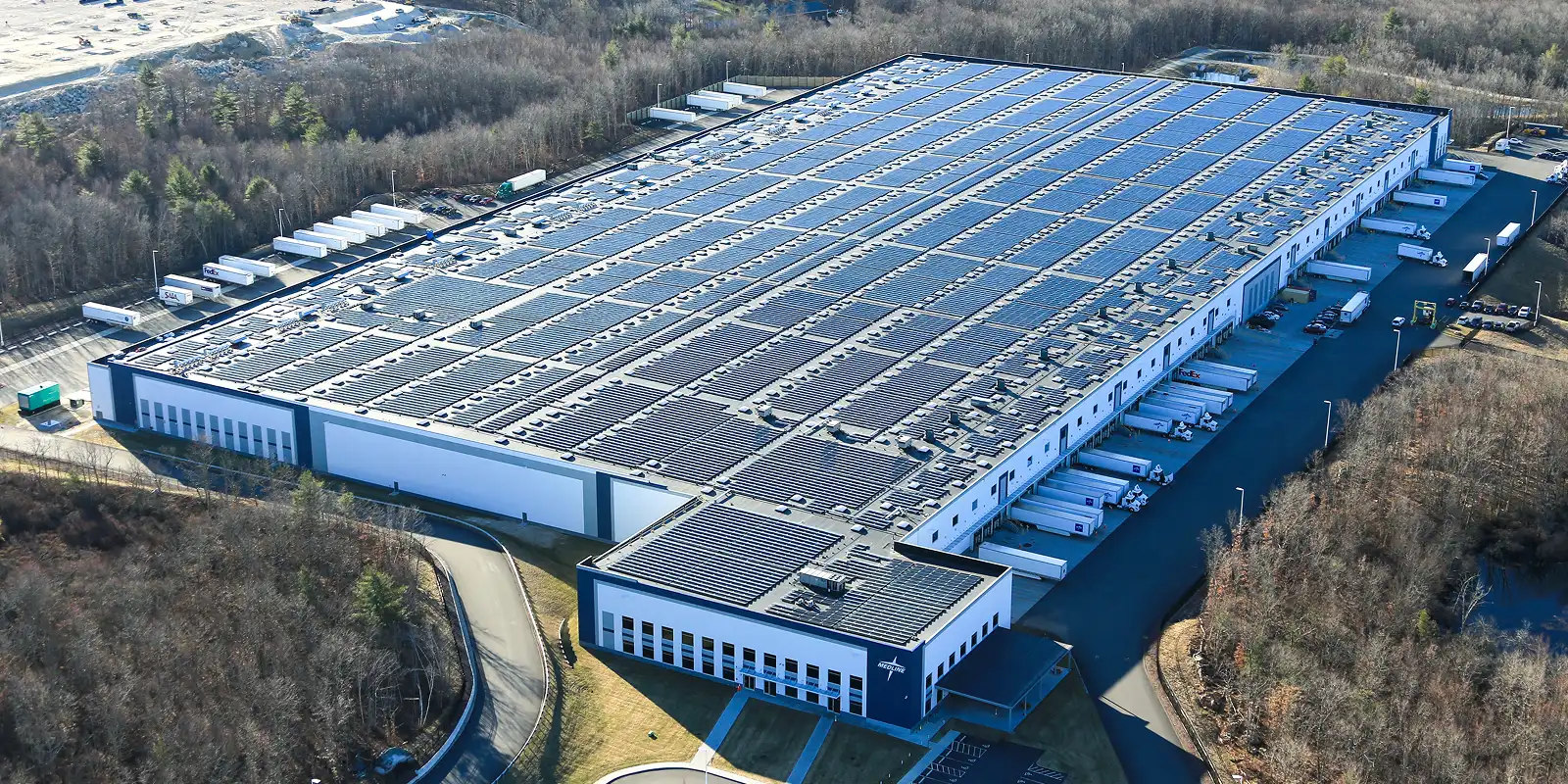
Many manufacturing plants, fabrication facilities, and industrial warehouses feature long, flat (or low-slope) roofs with minimal obstructions. These expansive surfaces are more than just structural necessities; they are underutilized assets waiting to be monetized.
Large rooftop areas allow for high-capacity solar installations capable of generating a meaningful share of a facility’s annual electricity consumption. Because manufacturing facilities often ramp up during daylight hours — when solar production peaks — they are well positioned to consume that energy onsite rather than exporting it to the grid.
This alignment drives stronger economics:
- Higher self-consumption of solar energy
- Reduced exposure to rising utility rates
- Greater long-term cost predictability
Unlike office buildings or retail spaces with variable occupancy patterns, manufacturing sites tend to have consistent daytime loads. That makes it easier to match solar production with actual energy use.
And because rooftop solar systems typically have lifespans of 25+ years, what was once dormant roof space becomes a long-term operational asset that delivers predictable savings year after year.
Ample Property for Ground-Mounts and Battery Enclosures
Not every facility is an ideal rooftop solar candidate. Structural limitations, HVAC equipment congestion, shading, or roof age can complicate installations. Fortunately, many manufacturing campuses offer another advantage: large tracts of land.
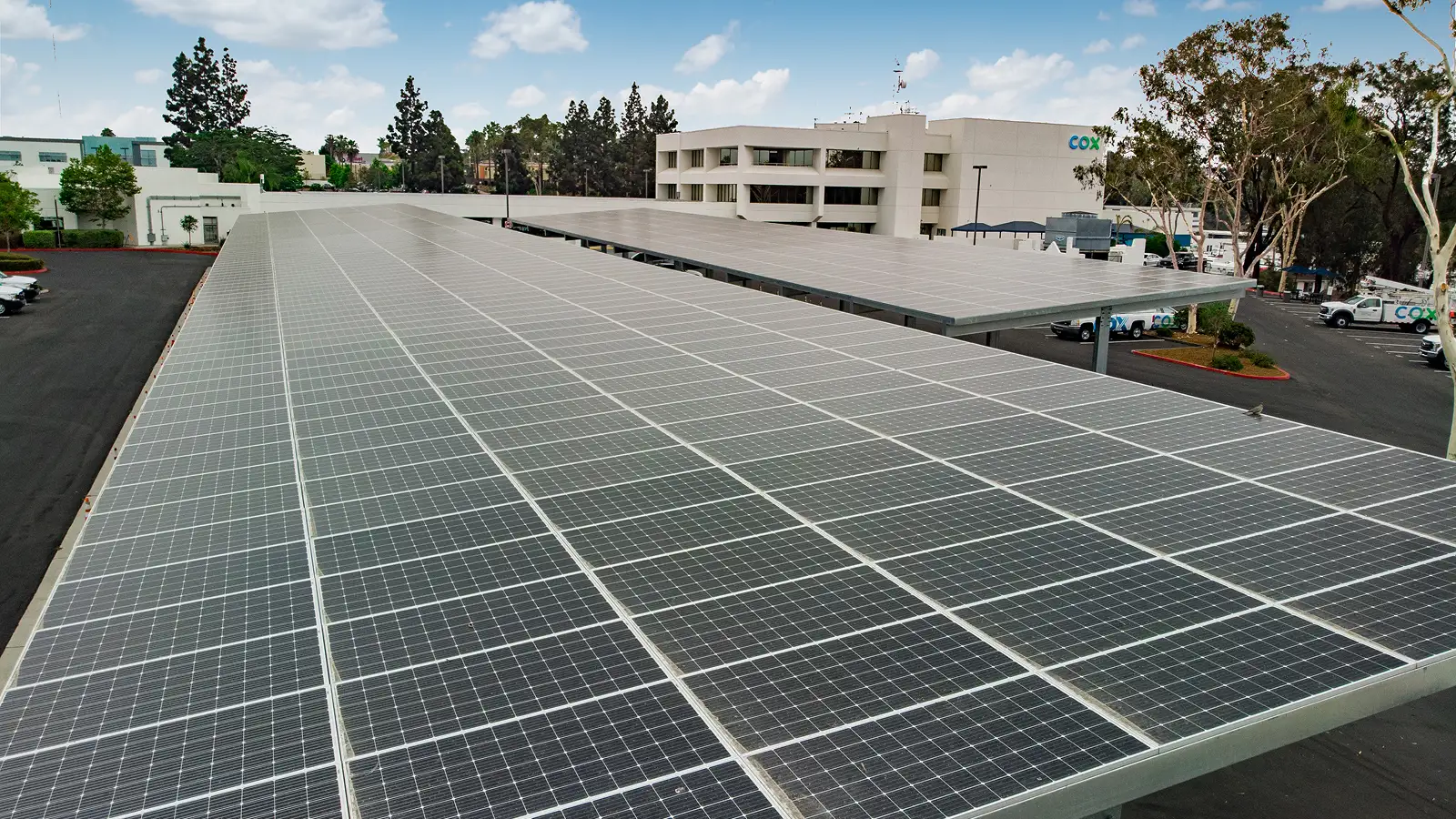
Industrial sites often include adjacent parcels, underutilized lots, or even former brownfields that can host ground-mounted solar arrays. These installations can achieve capacities similar to or even greater than rooftop systems while avoiding structural retrofits.
Battery energy storage systems (BESS) also benefit from manufacturing site layouts. Containerized battery enclosures can be positioned close to existing electrical infrastructure, reducing interconnection complexity and minimizing installation costs.
For facilities and energy managers, this flexibility matters. It means:
- More siting options to optimize system size and economics
- The ability to scale solar-plus-storage as energy needs grow
- Strategic placement near switchgear and distribution panels for efficient integration
In short, manufacturing campuses offer the space to design a system that fits operational realities.
Aligning Clean Energy With Manufacturing Operations
Physical suitability is only part of the equation. The real strength of manufacturing facilities lies in how naturally solar-plus-storage aligns with day-to-day plant activities.
Manufacturing plants tend to operate with:
- Continuous or multi-shift production schedules
- Predictable, high baseload energy consumption
- Large motor-driven systems and process loads
That predictability is a major advantage when optimizing solar and battery dispatch.
For example, peak shaving addresses one of the biggest cost drivers for manufacturers: demand charges triggered by short-term spikes in electricity consumption. When large motors, compressors, or process equipment ramp up simultaneously, battery storage can discharge in real time to smooth those peaks, lowering monthly demand charges without altering production schedules.
Similarly, solar shifting helps align midday solar generation with real-world plant schedules. Excess solar produced during peak sun hours can be stored and deployed later to support:
- Late-shift production
- Overnight testing runs
- Energy-intensive changeovers and cleaning cycles
Energy arbitrage strategies further reduce exposure to time-of-use rate spikes by charging batteries when electricity is inexpensive and discharging during higher-cost windows.
Because manufacturing loads are steady and repeatable, these strategies are easier to model, optimize, and replicate across facilities. That consistency often translates into stronger, more reliable returns compared to sites with erratic or low daytime demand.
As manufacturers electrify more processes and transition fleet vehicles to electric, onsite solar-plus-storage also helps absorb new loads, reducing reliance on grid upgrades and improving long-term energy flexibility.
Contact PowerFlex to Learn More About Solar-Plus-Storage
Manufacturing facilities are uniquely positioned to lead the transition to carbon-free electrification while simultaneously securing a competitive cost advantage. If your facility has the roof space, the land, or the high energy demand described above, you are likely an ideal candidate for a high-ROI solar-plus-storage system.
Ready to see how your facility’s specific characteristics can drive energy savings? Talk to a PowerFlex expert today to discuss a customized solar-plus-storage solution for your manufacturing business.