Why Airports Can’t Afford to Delay Clean Energy Adoption

Airports are under growing pressure to modernize. They must deliver a seamless passenger experience, support airline and tenant operations around the clock, and meet increasingly ambitious sustainability goals — all while managing rising energy costs and evolving infrastructure demands.
Investing in clean energy can alleviate these pressures, but there isn't much time to waste. Here’s how delaying the adoption of technologies like EV charging, solar energy, and battery energy storage creates risk, and why airports are uniquely positioned to benefit from these solutions.
Airports Are a Natural Fit for Clean Energy
Airports are among the most energy-intensive facilities in the world. With terminals, security systems, lighting, baggage handling, maintenance operations, and ground transportation all requiring substantial power, aviation hubs can consume as much electricity as a small city. That scale creates both a challenge and an opportunity.
Because airports operate large buildings on expansive land, they offer ideal conditions for a range of onsite clean energy technologies.
EV charging is a logical fit because airports serve a broad mix of drivers with different charging needs. Passengers parking for several days, employees on long shifts, rental car operators, ride-share drivers, and airport fleets all benefit from access to charging infrastructure. A combination of Level 2 and DC Fast Chargers can help airports serve this diverse demand while improving convenience for travelers and supporting broader transportation electrification goals.
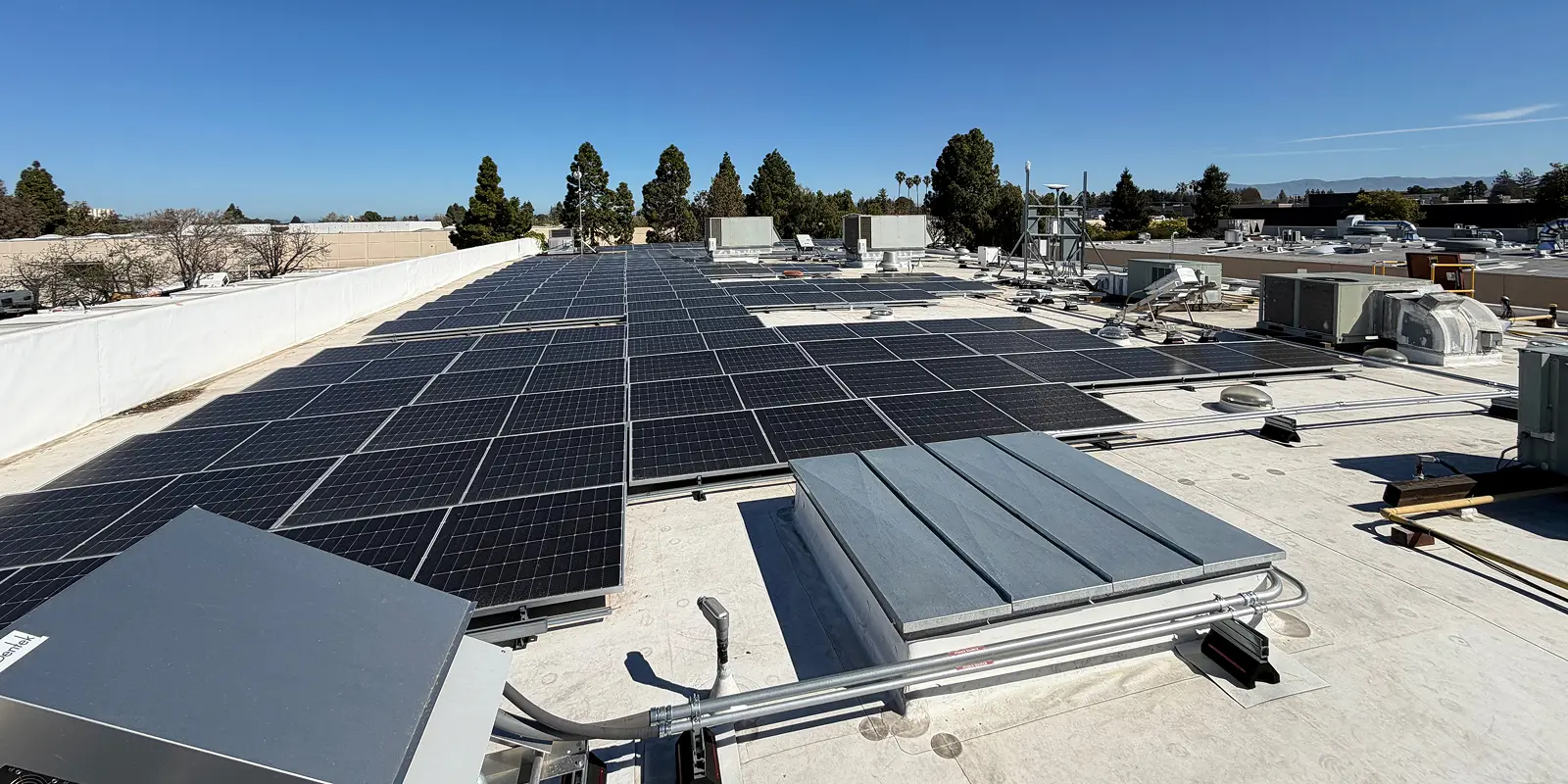
Solar energy is another strong match. Parking structures, terminal rooftops, and adjacent land can be transformed into energy-generating assets. Solar carports are especially attractive because they do double duty: generating clean electricity while providing shade and weather protection for parked vehicles. For airports, onsite solar can reduce reliance on grid electricity, lower energy costs, and visibly demonstrate a commitment to innovation and sustainability.
Battery energy storage strengthens the value of both solar and EV charging. By storing excess solar energy for later use, these systems help airports reduce peak demand charges, optimize time-of-use rates, and improve resilience. In environments where downtime is not an option, storage can also support backup power and microgrid strategies that keep critical operations running during grid disruptions.
Individually, each of these technologies offers meaningful benefits. Together, they create a more flexible, cost-efficient, and resilient energy ecosystem.
The Risks of Waiting are Growing
Despite these advantages, some airports are still taking a wait-and-see approach. That hesitation can be costly. Here are just some of the risks:
Poor Passenger Experience
One of the most immediate consequences is falling behind on EV charging demand. As more travelers, employees, and commercial operators switch to electric vehicles, airports without sufficient charging infrastructure risk frustrating users and diminishing the overall travel experience. A driver who cannot reliably charge at the airport may choose an alternative transportation option — or form a lasting negative impression of the facility. Over time, that gap can impact both customer satisfaction and brand perception.
Missed Financial Opportunities
There is also a clear financial downside to delay. Airports that postpone clean energy projects may miss time-sensitive incentives, tax credits, and funding opportunities that can significantly reduce upfront costs. At the same time, they forgo ongoing revenue opportunities from EV charging services and grid-support programs such as demand response. Layer on top of that the continued exposure to rising electricity prices and peak demand charges, and the cost of inaction becomes even more apparent.
Falling Behind on ESG
Delaying adoption can also hinder progress toward environmental, social, and governance (ESG) goals, as sustainability is no longer a peripheral issue for the aviation industry. Airlines, investors, regulators, business partners, and travelers are paying close attention to how airports reduce emissions and manage energy responsibly. Facilities that fail to demonstrate meaningful progress may find it harder to maintain stakeholder trust, attract partners, or align with broader decarbonization initiatives.
Energy Insecurity
Then there is the resilience issue. Airports depend on reliable power to keep essential operations functioning safely and smoothly. Continued dependence on traditional energy sources leaves them more vulnerable to utility price volatility and grid instability. Without onsite generation and storage, airports have fewer tools to manage disruptions and less control over their energy future.
Clean Energy Is a Competitive Advantage
For forward-looking airports, clean energy is about more than risk reduction. It is also a way to strengthen competitiveness: Airports that invest in EV charging can enhance favorability among passengers while preparing for the electrification of fleets and ground transportation. Adding solar and battery energy storage allows facilities to turn underutilized space into a long-term operational asset that can help manage costs, support grid participation, and improve energy reliability.
While these technologies are advantageous on their own, even more benefits can be gained by integrating them into a cohesive system. When EV charging, solar, and battery storage are planned together and intelligently managed, airports can maximize both operational and financial performance. This helps ensure that clean energy investments are not just sustainable, but scalable.
As the industry evolves, airports that move early will be better positioned to adapt to new regulations, meet stakeholder expectations, and create more resilient infrastructure. Those that delay may face higher costs, more complex retrofits, and greater pressure to catch up.
Act on Clean Energy Now With PowerFlex
A cleaner energy ecosystem that supports operational reliability, financial performance, and sustainability goals is possible for airports — but only with the right partner. PowerFlex takes an all-in-one approach, providing solar, storage, EV charging, and energy optimization solutions that are tailored to your needs and goals.
Ready to explore clean energy for your airport? Contact a PowerFlex expert today to get started.